

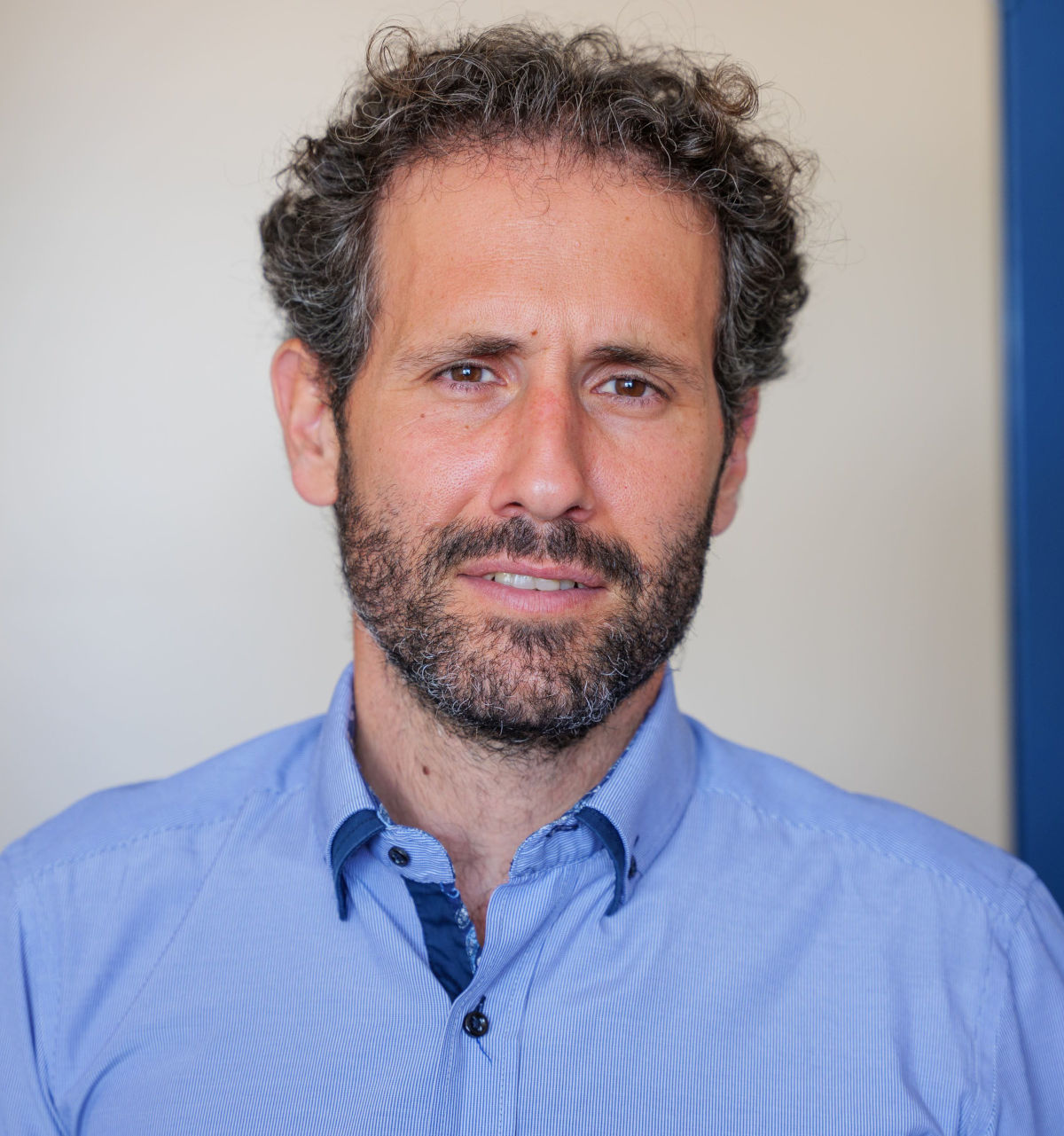
 Konstantinos Moustakas
Twinning the Physical World for Extended Reality
Konstantinos Moustakas
University of Patras
ABSTRACT
What would it take to make a true copy of the world? Not a snapshot of it, but a version that has the right shape, follows the same physical laws, and responds the way real things and real people do. Extended Reality has become remarkably good at showing us places we are not in. Its next frontier is harder and more interesting: building digital twins of objects, environments and even ourselves that we can step into, test and trust.
The difficulty is that the real world never hands us complete information. Every measurement is partial, every sensor misses something, and the world keeps changing while we observe it. Yet humans make sense of incomplete information all the time, by combining what they see with what they know about how things are built and how they behave.
This keynote explores how the same idea can guide machines. By blending learning from data with the laws of physics and the way people perceive the world, we can turn fragmented observations into living digital replicas that are not only convincing to the eye, but faithful to reality, opening the door to a new generation of immersive experiences.
SPEAKER BIOGRAPHY
Konstantinos Moustakas received the Diploma degree and the PhD in electrical and computer engineering from the Aristotle University of Thessaloniki, Greece, in 2003 and 2007 respectively. During 2007-2011 he served as a post-doctoral research fellow in the Information Technologies Institute, Centre for Research and Technology Hellas. He is currently a Professor at the Electrical and Computer Engineering Department of the University of Patras, Head of the Visualization and Virtual Reality Group, Director of the Wire Communications and Information Technology Laboratory and Director of the MSc Program on Biomedical Engineering of the University of Patras. He serves as an Academic Research Fellow for ISI/Athena research center. His main research interests include virtual, augmented and mixed reality, 3D geometry processing, haptics, virtual physiological human modeling, information visualization, physics-based simulations, computational geometry, computer vision. During the latest years, he has been the (co)author of more than 330 papers in refereed journals, edited books, and international conferences. His research work has received numerous awards. He has participated in more than 30 research and development projects funded by the EC and the Greek Secretariat of Research and Technology, while he has served as the coordinator or scientific coordinator in 4 of them. He is currently the coordinator of the Horizon Europe projects DynaCITY and XR-SENSE. He is a senior member of the IEEE, the IEEE Computer Society and member of Eurographics.